
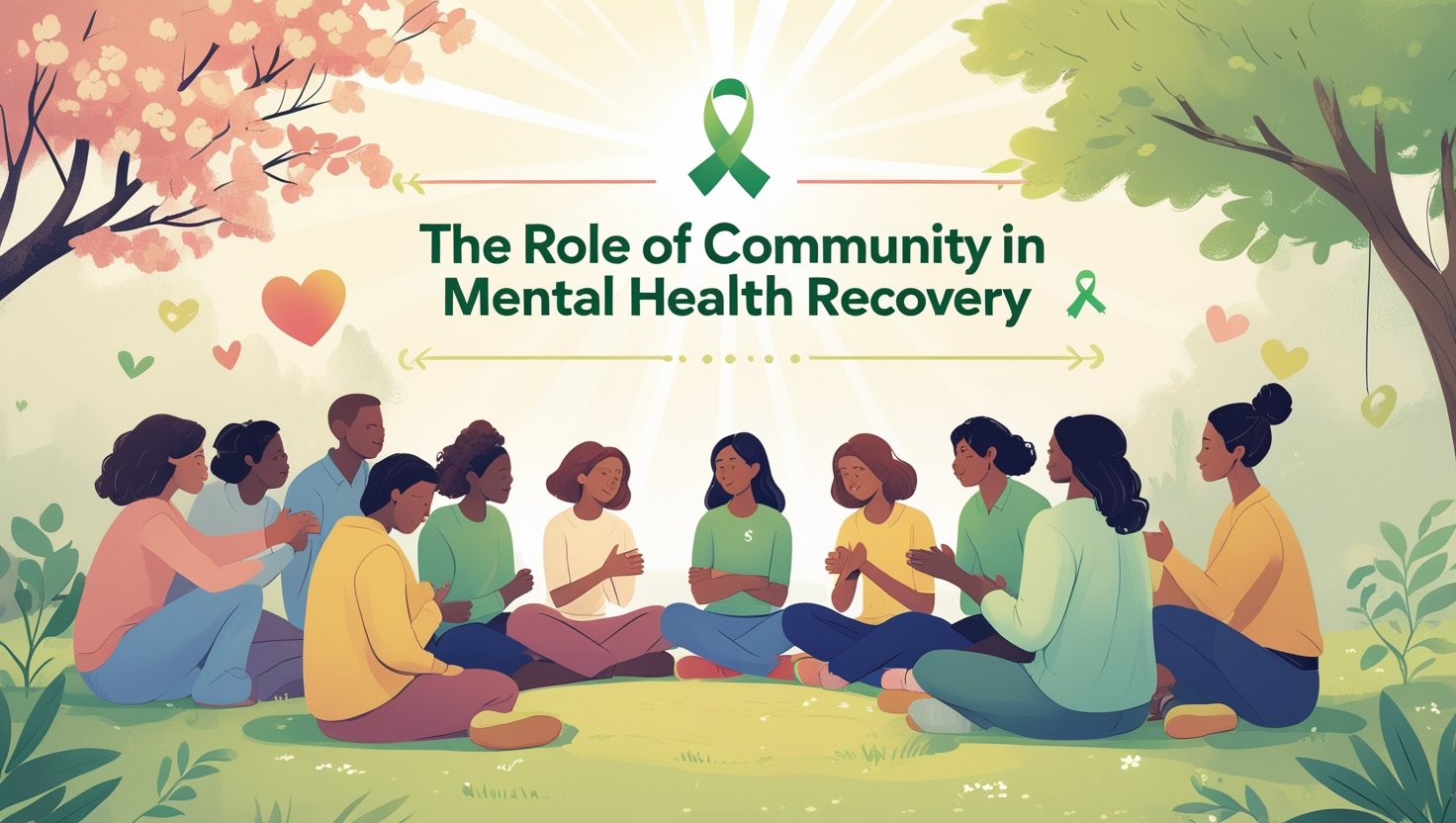
Mental health recovery is a journey that is different for each individual. It is not a straight journey; it involves ups and downs, emotional challenges, and sometimes loneliness. The most helpful thing on this journey is the support of the community. People often think mental health is just a matter of doctors, therapy, or medicines, but in reality, the environment, the influence of people, and their support are very important. When a person feels lonely, his recovery process slows down, but when there are people around him who understand him, who listen to him without judging him, his morale increases.
Every person needs emotional support at some level or the other, and when they get that support from their community, their heart and mind both start healing. This blog will discuss how a healthy, supportive, and empathetic community can make a person’s mental health recovery process easier and better. We will explore which community systems are available, how a sense of belonging enhances a person’s confidence, and how creating an inclusive culture provides long-term support to recovery.
Understanding Mental Health Recovery as a Journey:
If mental health recovery is understood as a journey, it is better understood that every person heals in their way and at their own time. This is not the result of some medicine which works instantly; rather, it is a process which requires time, patience, and consistent support. Often, people think that if a person is going through depression or anxiety, they should just relax a bit or take medication, and everything will be fine. But in reality, this journey includes emotional breakdowns, self-doubt, guilt, and sometimes even relapse. Recovery does not mean that the person will never think negative thoughts; rather, it means that he should understand these feelings, face them, and learn to manage his life.
In this process, if any community stands with that person, does not judge him, and gives him space and opportunity to understand, then he becomes ready for both recovery and growth. When the community starts to understand that mental health is not a weakness but a medical and emotional issue, then it plays a positive role in that person’s journey. Recovery is not just a personal effort; it is also linked to the courage and understanding of the people who are around that person. When this journey is accepted and supported, only then does real healing begin.
Why Community Support Matters in Healing:
When someone is facing mental health challenges, the first thing that matters to them is someone to support them, someone to listen to them, and someone to just be there for them. Community support is not just about physical help; it also means emotional presence, empathy, and understanding. When a person feels that he is not alone, that someone understands his feelings, he feels strong internally. The feeling that someone is taking care of him, someone is concerned for him, can help him come out of loneliness and start healing.
Often, family and friends just give advice or criticize without understanding, which becomes an obstacle in recovery. But when a community is empathetic, supports someone without judging, then its impact is directly seen on the person’s mental condition. The biggest benefit of community support is that it reduces shame and stigma. When people openly share their stories, others also get the courage to express their grief. In this way, a healing cycle begins, which gives every person a chance to grow emotionally. Community is not just the name of a place, but a network of people who accept you without conditions, try to understand you, and are there for you when things are difficult.
Types of Community Support Systems:
Different types of community support systems play an important role in mental health recovery. The method of support may vary according to each person’s circumstances and comfort zone. Peer support groups are a very effective source where people share their stories and experiences, and understand each other without judging. The benefit of these groups is that the individual feels that he is not alone and that other people have faced similar challenges. Apart from this, local mental health organizations organize workshops, counselling sessions, and awareness programs, which help in recovery. Mosques, churches, and religious centers also provide spiritual support and a safe space where people feel relief through prayer, meditation, and guidance.
Online support communities have also become quite popular these days, where people can anonymously share their pain, struggles, and progress. These digital platforms are useful for people who are not comfortable with face-to-face interaction. Apart from this, the presence of mental health clubs or counselors in schools and workplaces also has a positive effect. Every support system has its importance, and every person must have access to it. When multiple support channels are available, each person can choose the best option for themselves. The stronger the community network, the faster and more sustainable the recovery process will be.
How Belonging and Connection Improve Well-Being:
Mental health is improved not just by medicines but also by human relationships and connections. When a person feels a genuine connection with the people around him, when he feels that he is part of a group, his confidence and emotional well-being start to increase. Belonging means that a person understands that his feelings are valid, that he feels a sense of belonging in a place or among people. When you are in such an environment where people try to understand you without judging you, you can express your feelings openly. This openness lets you deal with your emotions honestly, and this process itself becomes the first step towards healing. Often during mental illness, a person feels isolated; he feels as if he is different from the world.
But when he becomes part of a supportive community, that social connection boosts his healing. Friendship, relationships, or even just a listener can sometimes make a difference that even therapy cannot. This connection not only gives support but also motivates a person to work on themselves and try to become better. When a person is a part of a meaningful relationship, his outlook on life changes and he feel more hopeful and positive. Emotional connection is like oxygen for mental health; it is needed every day.
Encouraging a Culture of Empathy and Inclusion:
If a culture of empathy and inclusion is developed in society on the basis of mental health, then many people’s lives can become easier. Empathy means trying to understand someone’s feelings, feeling their pain without passing judgment on them. When people in schools, offices, and neighborhoods understand, listen, and give space to each other, that environment becomes safe. Inclusion means that every person is accepted regardless of their mental condition. This culture will be formed when people promote open dialogue, get educated about mental health, and take care of language. When you belittle someone’s feelings by calling them crazy, insane, or attention-seeking, you become an obstacle to their recovery. Instead, if you encourage them, understand, and normalize them, they find it easier to share their grief.
If mental health literacy is taught in schools, there are emotional support systems in workplaces, and there is a non-judgmental environment everywhere, then people travel their journey in an open way. When every person feels that he is a valued member of a community, they feels better. The responsibility of creating this culture is not just of institutions but of every person. When we make empathy and acceptance our habit, it leads to a healthy and resilient society.
Conclusion:
Mental health recovery is not a journey of an individual alone; it is also a journey of the people around that individual. When a community comes together to understand an individual, supports him/her, and stands by him/her, the process of recovery becomes fast and sustainable. Improvement does come from therapy or medication alone, but healing goes deeper when it is accompanied by emotional backing and social connection. In this blog, we saw how different support systems, a sense of belonging, and an empathetic culture create a complete healing environment.
The role of the community is not just that of a listener; rather, it can become an active healer. When every person shows a little sensitivity and understanding at their level, it becomes a ray of hope in someone’s life. Healing does not just mean relief from pain, but it also means giving a new perspective to life. And this meaning often comes when someone has just said, “I am with you.” When the community walks together, even troubles seem lighter, and every darkness can turn into light. That is why it is important that we all come together and move towards such an environment where everyone can share their journey without fear. When healing happens alone, its effect is deep and long, and that is real growth.