
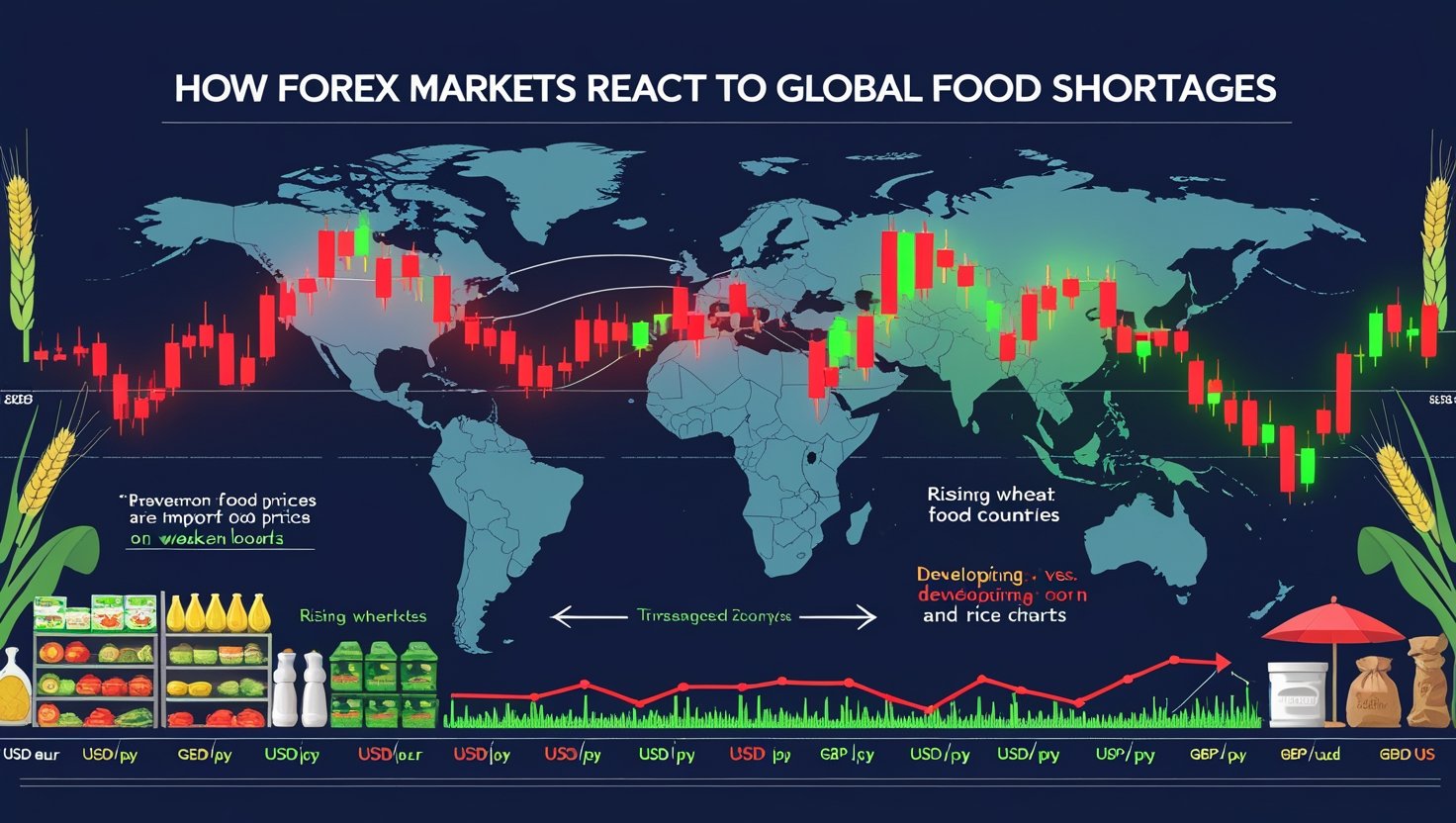
When there is a food shortage around the world, it not only affects people’s access to food but also impacts the economy and currency markets. Every small news item has an impact on the forex market, i.e., foreign exchange market. And when there is a food shortage in any country or around the world, it is not just an agricultural issue; it also becomes an economic and financial concern because people’s purchasing power decreases due to an increase in food prices, and inflation increases. When inflation increases, the value of currency falls because people spend more on essential things instead of saving money. Forex traders watch all these things very closely. And prefer the currencies of those countries which are stable or where economic policies control inflation. On the other hand, in countries that depend more on food imports, the currency comes under pressure because their trade deficit increases and reserves are low.
Thus, the direct effect of food shortage falls on forex rates, and market volatility increases. This introduction section makes the readers understand the connection between food and currency and why it is important that forex traders and investors keep an eye on global food conditions so that they can plan their strategies and manage their risks in time. Because food security is not just related to health or hunger. But it also happens with financial health.
- Impact on Agricultural Exporting and Importing Countries:
The impact of food shortages is very different between agricultural exporting and importing countries. When the economy of a country depends more on food exports, like Brazil or Australia, then a food shortage there means that their currency may weaken because their income is low, and international buyers also hesitate. But if there is a food shortage in an importing country like Egypt or Bangladesh, then the pressure is even more because they have to buy food at high prices, and their current account deficit increases. Due to this, their local currency depreciates. When food shortages occur globally, both types of food shortages occur. It affects the countries, but the impact is more severe on the importing countries. Forex traders sell the currencies of those countries in this scenario where food inflation is high and the balance of demand and supply is disturbed.
When the currency weakens, imports become more expensive, and the buying power of the people also decreases. The impact of this cycle comes back to the economy and forex. This section explains how the real-time impact of food shortages affects the forex value of different countries and how currency strength or weakness can be estimated. This analysis helps investors to plan their decisions and policy makers understand how to respond. - Inflation Pressures and Central Bank Reactions:
When there is a food shortage, the first effect is a price increase, and this price increase is directly related to inflation. Inflation means that things are getting expensive and people’s money is becoming less valuable. When inflation goes out of control, central banks have to intervene, and they increase interest rates so that people spend less and save more money. This action has a direct effect on the forex market. When the policy rate of a central bank increases, the currency of that country becomes attractive and traders buy it. But if a central bank does not respond or delays, then its currency becomes even weaker. Food inflation and this relationship with monetary policy are very important for forex traders, especially when the economy of a country is already fragile.
This section explains in detail how food shortage creates inflation and how inflation forces the central bank to change the interest rate. Apart from this, it is also discussed how monetary tightening or easing affects the currency value and how forex investors take trading decisions by looking at these signals. This understanding is also important for those who are making long-term investments or work on economic indicators so that they can do better planning by understanding the cycle of food and inflation. - Investor Sentiment and Safe-Haven Currencies
When there is uncertainty across the world, such as a food crisis or shortage, investors lose trust in volatile economies and they shift their money to currencies that are considered safe. These are called safe haven currencies such as the US dollar, Swiss franc, and Japanese yen. These are the currencies that provide stability during a crisis. At this time, investors want to secure their capital rather than take risky returns. Therefore, when there are food shortages, people sell emerging market currencies and buy haven currencies. This change in investor behavior is instantly reflected in the forex market, and there are sharp moves on currency charts.
This section explains what investor sentiment is. Apart from how the market shifts into a crisis and how the impact of events such as food shortages directly changes investor psychology, it also highlights why safe haven currencies are preferred and in what situations their demand increases. If a trader understands the mood of people and the direction in which they are shifting, he can adjust his forex strategy accordingly. The advantage of this understanding is that you are not just looking at technical charts but also understanding economic emotions and human behavior, which is the real driver of the market. - Commodity Currencies and Market Volatility;
Some currencies are commodity-based based i.e., the economy of those countries is more dependent on the export of commodities like Australia, Canada, New Zealand, and Brazil. When there is a food shortage, both the demand and prices of agricultural commodities go up. This increases the export income of those countries. But if those countries also suffer from food shortages, their supply gets disturbed and their trade surplus reduces. This instability creates volatility in their currencies.
The reaction of commodity currencies is very dynamic, and it depends on the demand, supply, and global prices. In the forex market, these currencies can also be strong in the short term if the prices go in their favor, but if the food crisis gets extended, the strength of these currencies does not sustain. It explains how commodity currencies behave in response to the global food crisis and how volatility increases. Forex traders must understand that the behavior of commodity currencies is not just limited to oil or metals; food is also a major factor. By understanding this volatility, traders can make better decisions regarding hedging and risk management and can protect their portfolio from sudden shocks. When the market is uncertain, volatility is the thing that only traders who handle it correctly can benefit from. - Conclusion:
The result of all this discussion is that global food shortage is not just a humanitarian issue but also an economic and financial challenge that directly impacts forex markets. Forex traders, investors, and policy makers all need to understand that food signals are not just limited to grocery stores but also reach currency charts. When there is a food crisis in a country, there is inflation, central banks respond, investor sentiment shifts, and there is pressure on safe havens or commodity currencies. All this has an impact on forex rates, and if a trader identifies these factors on time, he can avoid the risk and generate better returns.
In this conclusion, it is emphasized that food security and economic security are interlinked and cannot be seen separately. If a country is food resilient, its currency will also remain stable in the long term. But if a country has high dependency on food imports, then there is pressure on both its people and currency. Therefore, in today’s modern forex environment, keeping an eye on food indicators is not just an option but a necessity so that we can be prepared for financial shocks in a hungry world and make our trading decisions more informed and sustainable.